7 Signs You Need Water Heater Replacement in Palm Coast, FL
Most Palm Coast homes were built between 2000 and 2012. That means most original water heaters installed during construction are now 14 to 26 years old. Standard tank units are rated for 8 to 12 years. In Palm Coast’s conditions — Flagler County hard water, coastal humidity, and year-round heat — many units start declining well before that upper limit.
Below are the seven signs that typically point to replacement over repair, with context specific to how these issues show up in Palm Coast homes.
First: Find Out How Old Your Water Heater Actually Is
Before anything else, check the serial number label on the upper third of the tank. Most manufacturers encode the manufacture date in the first few characters — but the format varies by brand.
| Brand | How to Read the Date | Example |
|---|---|---|
| Rheem / Ruud | First 4 characters: digits 1–2 = week, digits 3–4 = year | 2112 = 21st week of 2012 |
| AO Smith / State / American | First letter = year code, next two digits = week | F09 = 2015, 9th week |
| Bradford White | First letter = year (A=1984, cycling every 20 yrs), second = month | CE = 2002, May |
If your unit is still within a 6- or 12-year warranty window, the tank replacement may already be covered — worth checking before you schedule anything. Your water heater service page has more on what to expect during an inspection.
Why Palm Coast Water Heaters Age Faster Than the National Average
Flagler County Utilities water carries enough dissolved calcium and magnesium to accelerate sediment buildup at the bottom of the tank. That sediment layer makes the heating element work harder, traps heat, and shortens the unit’s effective lifespan.
On top of that, the salt-air humidity near the Intracoastal and Atlantic corridor speeds up exterior oxidation — on fittings, the pressure relief valve, and the tank surface itself. This exterior corrosion develops independently of the anode rod protecting the inside.
Most Palm Coast homes run electric water heaters. Natural gas is not distributed across most of Flagler County. That means signs like pilot light failure — covered in most generic articles — don’t apply here. The Palm Coast-specific failure modes are heating element burnout, thermostat failure, and sediment-insulated elements overheating and tripping the circuit breaker.
The 7 Signs
The Unit Is 10 Years Old or More
Age alone is a reason to evaluate, not just a supporting detail. A 10-year-old tank in Palm Coast has spent its entire life in hard water and coastal humidity. Repairing it is usually spending money to extend a unit that will need replacement in the near term regardless.
Check the serial number. If the house is from the early 2000s and you’ve never replaced it, that unit is overdue for an honest assessment. Homes throughout Indian Trails, Palm Harbor, and Lehigh Woods built between 2000 and 2008 are squarely in this window right now.
You’re Running Out of Hot Water Faster Than Before
Sediment at the bottom of the tank reduces usable water volume and forces the element to heat against an insulating mineral layer. What used to supply two showers now runs cold midway through the second one.
Annual flushing slows this. But once sediment hardens — which happens faster in Palm Coast than in soft-water markets — flushing can’t fully reverse it. If reduced hot water output is new and the unit is over 8 years old, it’s a replacement conversation.
You Hear Rumbling, Popping, or Banging
Water trapped under hardened sediment is forced through the layer each time the element fires. The result is the rumbling or banging noise Palm Coast homeowners often describe coming from the garage or utility closet.
The noise signals stress on the tank — expanded heating cycles, metal contracting against sediment, accelerated wear at the base. A flush may quiet it temporarily. On a unit over 8 years old with persistent noise, replacement is the practical call.
The Hot Water Is Rusty, Brown, or Tastes Metallic
The sacrificial anode rod inside the tank — typically magnesium or aluminum — is designed to corrode before the steel tank walls do. When it depletes and isn’t replaced, the tank itself starts rusting from the inside.
Quick confirmation: run the cold tap separately. If only the hot side is discolored, the supply line isn’t the issue — the tank is. In Palm Coast, coastal humidity accelerates exterior oxidation at the same time the interior is corroding. Once rust is in the water, the tank is not recoverable. Replacement is the only option.
Water Is Pooling at the Base of the Unit
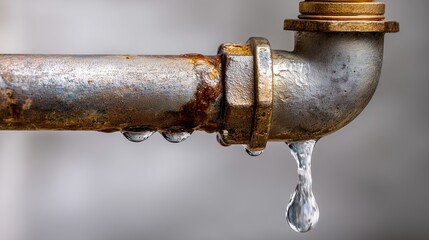
Distinguish this from condensation first. Condensation appears during humidity swings, dries on its own, and leaves no residue. An active tank leak returns after you dry the area and often leaves a white or rust-colored mineral ring on the concrete.
In Palm Coast’s slab-on-grade homes, a leaking tank has nowhere to drain. Water spreads under walls across the slab pad before it becomes visible on the surface. By the time you see it, the spread is usually already underway. See more on how slab homes hide plumbing leaks in Palm Coast.
Your Electric Bill Has Increased Without Explanation
Water heaters account for 14 to 18 percent of home energy use. A sediment-insulated element or failing thermostat forces longer heating cycles — and measurable monthly increases.
In Palm Coast, FPL and SECO Energy rate increases do happen. But a consistent $25 to $40 monthly increase alongside other signs on this list points to the unit, not the rate schedule. If the unit is over 8 years old, that efficiency gap only widens from here. A suddenly high water or energy bill in Palm Coast is one of the most consistent early indicators of equipment decline.
You’ve Had Two or More Repairs in the Past Two Years
A single heating element replacement or thermostat swap is normal maintenance. The pattern that points toward replacement is repeat repairs in a short window — or a repair quote that approaches a significant percentage of a new unit’s cost.
The rule most licensed plumbers use: if the repair exceeds 50 percent of replacement cost and the unit is over 7 years old, replacement wins. In Palm Coast, a standard 40- or 50-gallon electric tank runs $1,100 to $1,800 fully installed. A $650 repair on an 11-year-old tank in Flagler County hard water is not a good investment.
The Pressure Relief Valve — A Warning Sign Most Homeowners Miss
The T&P (temperature and pressure relief) valve is on the side of the tank, near the top, with a lever and a discharge pipe running toward the floor. Its job is to release pressure if the tank overheats or over-pressurizes.
If the valve is dripping continuously, or the discharge pipe is releasing steam or hot water, that’s not a valve maintenance issue. It means the tank itself is building excess heat or pressure. That’s a safety concern — call a plumber the same day, not at your next convenience.
Seeing one or more of these signs in your Palm Coast home? Palm Coast Pro Plumbing can inspect and give you a straight answer — repair or replace — without pressure.
Call Palm Coast Pro Plumbing: (386) 267-9595 Serving Indian Trails, Palm Harbor, Lehigh Woods, Cypress Knoll & all of Flagler CountyRepair or Replace? How to Decide
| Unit Age | Situation | Recommendation |
|---|---|---|
| Under 8 years | Single component failure, no rust or pooling | Repair |
| Under 8 years | Rust in water or base leak | Replace |
| 8–10 years | Noise, lukewarm water, rising bills | Inspect — likely replace |
| 10+ years | Any sign from the list above | Replace |
| Any age | T&P valve tripping repeatedly | Urgent inspection |
Tank vs. Tankless — What to Know Before You Decide
Tankless units heat on demand, last 15 to 20 years, and eliminate standby heat loss. For the right household, the long-term savings are real. For Palm Coast specifically, there are three things worth knowing before making the switch. Learn more on our tankless water heater page.
Hard Water & Descaling
Flagler County mineral content attacks tankless heat exchangers faster than tank interiors. Without annual descaling, failure occurs well short of the rated lifespan.
Amperage & Panel Limits
Most early-2000s Palm Coast homes have 150-amp service. A whole-home electric tankless unit often requires a panel upgrade — that adds cost to the conversion.
Break-Even: 6–9 Years
Worth it if you’re staying long-term and willing to maintain annually. If selling within 5 years, a quality tank replacement is the simpler, more cost-effective choice.
What to Have Ready Before You Call
- The serial number from the label on the tank — your plumber can decode it and confirm the age immediately
- The symptom in specific terms — noise, color, temperature, visible moisture — not just “it’s not working right”
- Whether you’ve had recent repairs and what was replaced
- Your warranty status — check the paperwork from when the unit was installed; tank replacement may already be covered
Plumbing Takeaways for Palm Coast Homeowners
- Units in Indian Trails, Palm Harbor, Lehigh Woods, Cypress Knoll, and Matanzas Woods built in the early 2000s are in or past the standard replacement window right now
- Flagler County hard water shortens effective water heater lifespan — plan for the lower end of the 8–12 year range
- Rust in hot water and pooling at the base are the two signs that mean same-day action, not a wait-and-see approach
- The T&P valve dripping is a safety signal, not a maintenance footnote
- Use the 50% rule: a repair exceeding $550–$600 on a unit over 7 years old in Palm Coast is usually better money toward a new installation
Frequently Asked Questions
The national average for a tank water heater is 8 to 12 years. In Palm Coast, Flagler County’s hard water and coastal humidity often push units toward the lower end of that range. Many units here start showing signs of decline at year 8 to 10, particularly if they haven’t been flushed annually. Plan for the lower end and evaluate proactively at year 8.
Check the serial number label on the upper third of the tank. The manufacture date is encoded in the first few characters, but the format differs by brand. Rheem and Ruud use a four-digit code where the first two digits are the week and the last two are the year. AO Smith, State, and American use a letter-then-two-digit format. Bradford White uses two letters. If you’re unsure, a plumber can decode any brand’s serial number in under a minute.
Yes, and it’s more common in Palm Coast than in soft-water markets. Flagler County’s mineral-rich water accelerates sediment accumulation at the bottom of the tank. A unit that hasn’t been flushed annually can develop significant hardened sediment by year 6 to 8. At 7 years with active noise, a professional flush and inspection is the right call — it may extend the unit’s useful life, or confirm replacement is the better path.
It depends on where the leak is coming from. A leak at a fitting, valve, or connection is often repairable — those are components, not the tank itself. Pooling at the base that returns after you dry it, or a rust-colored mineral ring on the concrete, almost always indicates a crack in the tank wall. That is not repairable. In a Palm Coast slab home, a leaking tank spreads water across the slab pad before it becomes visible — act the same day.
A standard 40- or 50-gallon electric tank water heater, fully installed in Palm Coast, typically runs $1,100 to $1,800. The range reflects differences in unit brand and capacity, access location (garage vs. attic vs. closet), and whether any fitting or connection work is needed. Get a written quote after a plumber confirms the scope in person — any quote given before an on-site assessment is an estimate, not a price.
For the right household, yes. Tankless units last 15 to 20 years, heat on demand, and reduce standby energy loss. The Palm Coast-specific caveats: Flagler County hard water requires annual heat exchanger descaling, and most early-2000s homes with 150-amp electrical service may need a panel upgrade to support a whole-home electric tankless unit. The break-even against a tank unit is typically 6 to 9 years. If you’re staying in the home long-term and committed to annual maintenance, it’s a sound investment. Visit our tankless water heater page for more detail.
The T&P (temperature and pressure relief) valve is a safety device on the side of the tank that releases pressure if the water inside overheats or the tank over-pressurizes. If it’s dripping continuously or releasing steam, that isn’t a valve problem to patch — it’s the tank telling you it’s building excess pressure or heat. This is a same-day call, not a maintenance item to defer.
Yes, and annual flushing genuinely helps — particularly in Palm Coast where sediment accumulates faster than average. Attach a garden hose to the drain valve at the base, shut off the cold supply, open the drain, and let it run until the water clears. The catch: if flushing has been skipped for several years, sediment may have hardened to the point where a standard flush doesn’t fully clear it. At that stage, a professional can assess whether a more thorough flush or replacement is the right next step.
Not sure whether to repair or replace? Palm Coast Pro Plumbing serves Palm Coast, Palm Harbor, Indian Trails, Pine Grove, Lehigh Woods, Cypress Knoll, Matanzas Woods, and surrounding areas in Flagler County. We’ll tell you what we find, explain the options, and let you decide — without pressure.
Call Palm Coast Pro Plumbing: (386) 267-9595 Licensed plumber · Flagler County · Water heater repair & replacement