What the Salt Air Is Really Doing to Your Pipes in Palm Coast
Salt doesn’t need water to damage a pipe. It just needs air.
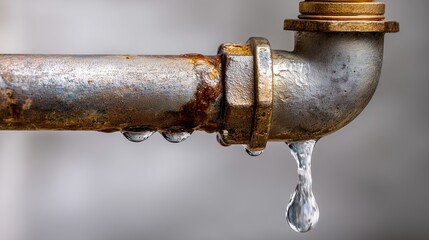
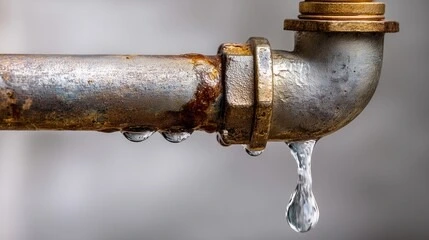
Salt pulls moisture out of the atmosphere and holds it against metal. That trapped moisture sets off a slow electrical reaction between the salt, the water, and the pipe wall. Copper and galvanized steel lose material a little at a time until a wall thins out and a pinhole opens up. No dramatic burst. Just a small wet spot that shows up one day and won’t go away.
We see this pattern often enough in Palm Coast that we stopped calling it unusual.
A Call on Point Pleasant Drive
A few years back we got a call from a homeowner near Palm Harbor. Water pressure had been dropping for months. He figured it was the well pump or maybe the city supply. When we opened the wall behind the laundry room, the copper line had a cluster of small green-blue spots along one section, each one a tiny leak working its way through from the outside.
The house was built in 2004. Nothing unusual about the plumbing install. What made the difference was the location: a few blocks from the Intracoastal, facing the open breeze that comes off the water most afternoons. Twenty years of that air had done more damage to his supply lines than most inland homes see in twice that time.
We repiped the affected section with PEX and the pressure problem disappeared the same day. That call is the reason we started paying closer attention to where a home sits relative to the water, not just how old it is.
How Salt Air Actually Corrodes a Pipe
Salt is hygroscopic. It grabs moisture out of humid air and holds onto it. When that moisture sits against copper or galvanized steel, it creates a small electrolytic reaction, the same basic process that rusts a bike chain left outside, just slower and mostly hidden behind drywall or under a slab.
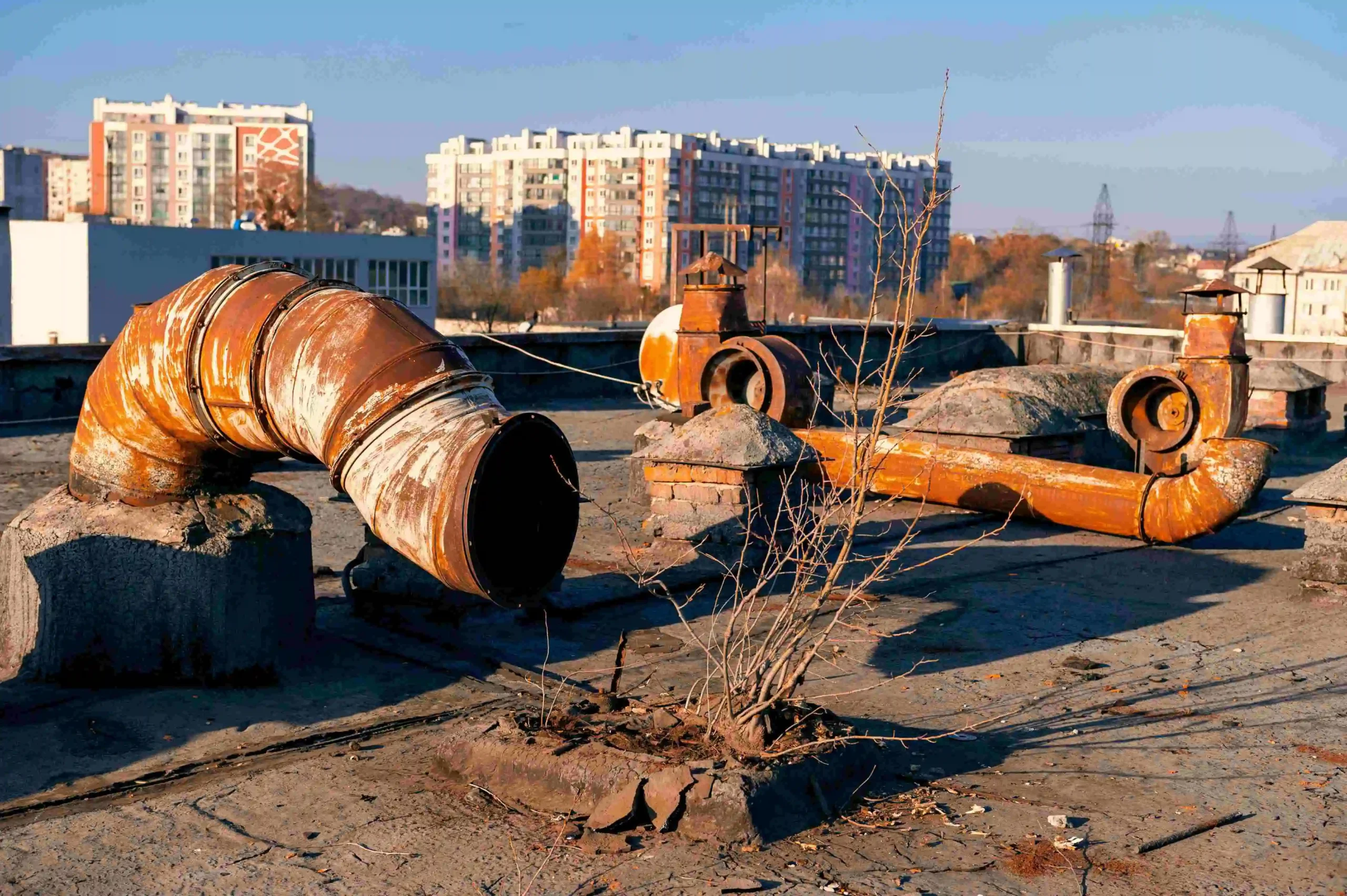
The damage starts on the outside of the pipe and works in. By the time you see a wet spot or a pressure drop, the pipe has usually been losing material for years.
Why Palm Coast Isn’t Just “Generic Florida”
Most articles on this topic are written for the whole state. Palm Coast has its own specific set of conditions that make this worse, or better, depending on where you live.
Distance from the Water
Neighborhoods closer to the Intracoastal catch more salt-laden air on a regular basis than neighborhoods further inland.
Slab Foundations
Most Palm Coast homes are built on a slab, which means copper supply lines often run under or through that slab. Trapped humidity down there has nowhere to go.
Onshore Breeze off A1A
On windy days that salt air travels further inland than people expect. It’s not just the waterfront homes affected.
2000–2009 Construction Boom
A large share of Palm Coast homes were built in this window. Original copper lines in these homes are now old enough, twenty-plus years, to be entering the stretch where salt-driven corrosion becomes visible.
None of these factors on their own is unusual for coastal Florida. Together, in a city built mostly in one decade with this specific geography, they add up to a faster corrosion timeline than a lot of homeowners expect.
Signs Salt Air Is Already Working on Your Pipes
This is usually what gets us the call, roughly in the order homeowners notice it:
- Water that runs rust-colored or cloudy for a few seconds after sitting unused
- A metallic taste that wasn’t there before
- Water pressure that’s quietly dropped over months, not all at once
- Green or blue staining around fittings, valves, or the water heater connection
- A damp spot on a wall or under a cabinet that never fully dries out
- A water bill that’s crept up without an obvious reason
Any one of these alone might be nothing. Two or more together, especially in a home built before 2010, is worth a look before it turns into a wall repair on top of a pipe repair.
How Far Inland Does It Actually Reach
Salt exposure isn’t a hard line. It fades the further you get from open water, but it doesn’t disappear.
Homes within about a mile of the Intracoastal or the beach see the most consistent exposure and tend to show corrosion earliest. Homes in the next band out, roughly a mile to three miles, still get hit on windy days but at a slower pace. Further inland, exposure drops off, though it never fully goes away in a city this close to the coast.
Note: these are field-based estimates, not a scientific study. If you’re not sure where your home falls, the fastest way to know is a straightforward pipe inspection rather than guessing from a map.
Which Pipe Materials Actually Hold Up Here
Copper. The traditional standard, and it holds up fine inland or in newer construction. Near the water, it’s the material we replace most often once it hits the twenty-year mark.
Galvanized steel. The weakest performer against salt air. If your home still has original galvanized supply lines, this is worth addressing before it becomes an emergency, not after.
PEX. Our default recommendation for coastal repipes. It doesn’t corrode from salt exposure the way metal does, and it handles the slab-and-humidity combination common in Palm Coast homes better than copper.
CPVC. Also corrosion-resistant, used less often than PEX in this area but a reasonable option in certain applications.
If you’re weighing a repipe, this is the short version: PEX is what we’d put in our own house.
Repair, Flush, or Repipe?
Not every sign here means a whole-home repipe. A simple way to think about it:
When in doubt, an inspection is a lot cheaper than guessing wrong in either direction.
What You Can Do Between Inspections
- Flush your water heater once a year. Sediment and corrosion build up faster near the coast.
- Check exposed fittings and hose bibs for early green or blue staining. Catching it early is a five-minute fix instead of a wall repair.
- Don’t write off a small pressure drop as “just the well” or “just the city.” Get it checked.
- If you’re in the higher-exposure zone near the water, a pipe inspection every year or two is worth the cost compared to a hidden leak running for months.
Frequently Asked Questions
Does salt air affect indoor pipes, not just the ones outside?
Yes. Salt-laden humidity gets into wall cavities, under slabs, and into attic spaces through normal air exchange. Indoor supply lines corrode from the same trapped moisture, just more slowly than a pipe sitting directly outside.
How much faster do pipes corrode near the Intracoastal compared to inland Palm Coast?
We don’t have an exact multiplier, but in the field we see homes near the water start showing corrosion signs five to ten years earlier than similar homes further inland.
Is switching to PEX really worth it?
For a coastal home with aging copper, yes. It removes the corrosion risk entirely and it’s a one-time cost against what could otherwise be years of small repairs.
How do I tell if it’s salt corrosion or just old pipes?
Location is the biggest clue. Corrosion concentrated near exterior walls, in homes closer to the water, showing up earlier than you’d expect for the pipe’s age, usually points to salt exposure rather than plain wear.
Does a water softener help with this?
A softener addresses hard water minerals, not airborne salt corrosion. It’s a useful upgrade for other reasons but won’t slow down what salt air is doing to your supply lines.
The Bottom Line
Salt air corrosion is slow, quiet, and almost always preventable if it’s caught early. A pipe that’s twenty years old in a coastal home isn’t automatically a problem, but it’s worth knowing where you stand before a small leak becomes a wall repair.
We work throughout these Palm Coast neighborhoods:
- Palm Harbor
- Pine Grove
- Indian Trails
- Lehigh Woods
- Cypress Knoll
- Matanzas Woods
Seeing Any of These Signs?
If you’re seeing any of the signs above, or you just want to know where your home falls on exposure, give us a call or schedule an inspection online. We’ve seen this exact problem often enough to know what to look for the first time we open a wall.